Tuesday, 8 February 2011

Day 28: Winter mood, Osip, and Mustvee

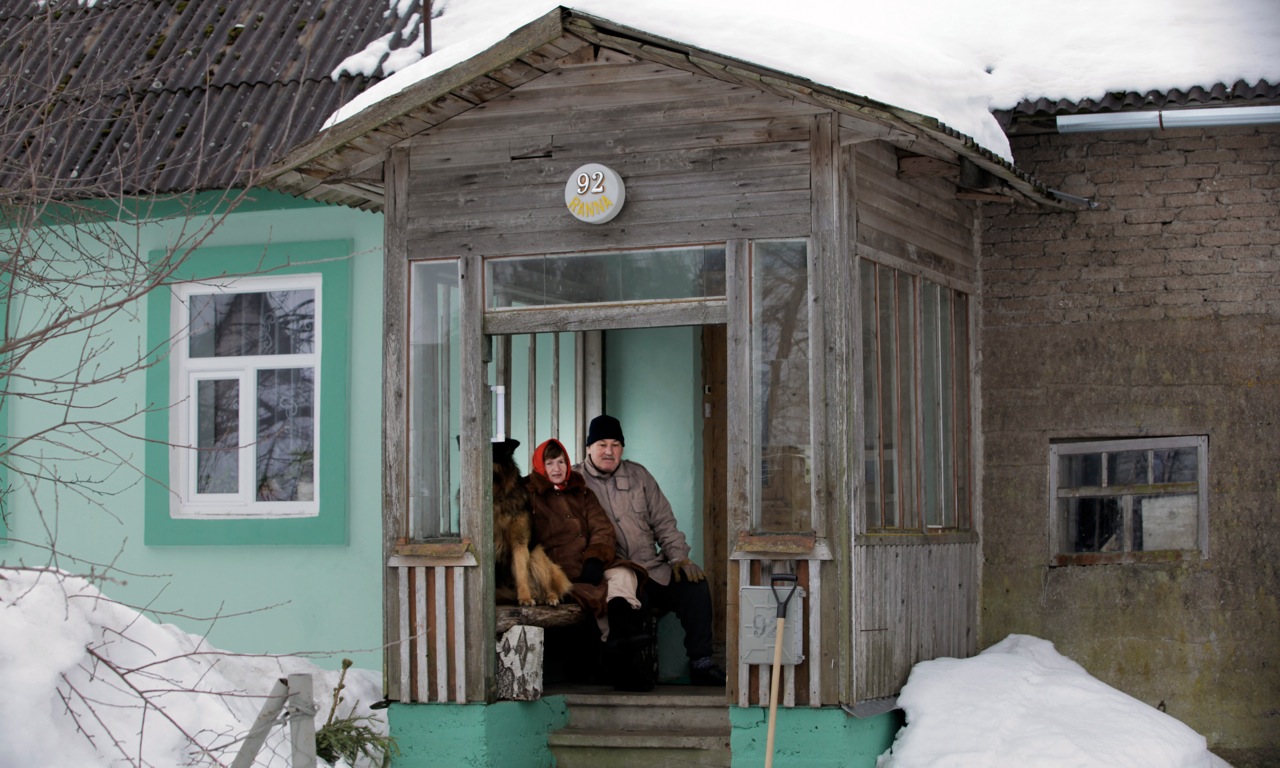
We decide to go north for once, after spending the last few days mostly in and around Kolkja. So we visit Raja, where we manage to film beautiful winter motifs of houses and people and the winter mood; also we visit the wonderful cemetery that's located right at the lakeside. As we go around Raja, we call Osip, the lay preacher of the local church. He's happy to see us again as we meet him for a talk near his house, and agrees to let us into his church again to complete our film and photo material on the icons and ceremonial items in there, as well as his photos and books, and of course the Frolov icons Osip loves to talk about, and which indeed are impressive pieces of art.

Not only are we as usual impressed by Osip's knowledge and intelligence, by the way he talks and by the gentle and positive attitude he simply has - also visually, Osip is the kind of man who could probably make a good career as a testimonial face in advertising, be it for some alpine chocolate or fish fingers.


Finally we head on to Mustvee, since we realized that despite of having visited the small town a few times, we didn't really have any material on it, and hadn't discovered anything nearly as interesting as in the villages down south. We drive and walk around, and again can't really find too much that's interesting either from a visual or from a storytelling perspective. There's a small Old-Believer's community and its church, as well as a local Old-Believers' museum, but at least from the outside, none of the places we can find provides interesting visuals. The town feels rather interchangeable, and lacks the specific character and mood of the smaller villages. So we decide that with its Statoil gas station, its regional bus station, a few cafes and an ATM, Mustvee would rather be our administrative place where we go to refuel, recharge, and deal with life's necessities. Still when going past the lakeside, we find at least a few nice motifs for photography.

Monday, 7 February 2011

Day 27: Songs, war stories, and a catch

We return to Kolkja already in the morning to visit Mother Varvara, who became one of the focal points of our trips here; a wonderful lady with plenty of stories to tell and information to share. Her son is on the lake fishing as we talk with her in her house; as we go along and chat about this and that, Varvara starts to sing some traditional songs for us.


Back on the road, we meet an elderly man without teeth, who is on his way to visit his friend, and spontaneously invites us to join him. We agree and go with him, yet as we arrive it turns out that his friend is ill and in bed. So instead of paying him a visit, the man we met sits down in front of his friend's house with us, and starts telling us about the war in Afghanistan, where he had to fight for the Soviet army. Tears roll down his face as he tells how the war left him disabled, with his legs full of nails and screws. We spend a rather long time talking, and every time someone walks past on the street, they greet the man. It's a small place, where everybody knows everyone, yet we also sense that this particular man is treated with a certain extra respect.

We drive back to Kasepää and go over to Timofey's house, but nobody opens the door as we knock. Maybe he's not at home, but we're afraid that maybe Timofey is at home, but prefers to spend the last days with his wife uninterrupted and alone. We leave and go back to Kolkja.


Where behind Varvara's house, we meet Vassily, a smile lighting up his entire face. Vassily had spent his day fishing, but unlike two days ago, he was indeed luckier today and brought home an impressive catch: A whole number of large fish, among them a superb pike. Vassily is laughing and looks very enthusiastic, the successful fishing day obviously made him a very happy man for the day. The men heat up the sauna and serve vodka to celebrate the fishing day's success, and Vassily tells us enthusiastically about the biggest fish his father ever caught, a pike that was so large that when you carried the fish over your shoulder, its tail fin would still touch the ground. Unfortunately, though, the fish was already pretty old when they caught it, and didn't taste good. Certainly today's catch will be very tasty though!

Sunday, 6 February 2011

Day 26: Panorama, monster trucks, and a collapsed house

Early in the day we finish off yesterday's lake and fishing visuals by recording some additional panoramic takes of the lake, with the fishermen sprinkled as small dots across a vast empty and blindingly white area. What a difference between the seasons! As most of our team who's at the lake originally comes from Germany and Switzerland, we are well used to different weather in different seasons, but not to the extent in which it is the case up here in the North-Eastern corner of the European Union.

 The endless summer days in which the sun barely sets, sun and warmth, the lake inviting for a swim, everything is very green and everything simply smells of fresh and pristine nature... and then the winter, in which as it feels nature is asleep, and so are the people. The sounds are dampened, the air is crisp and clean and smells of nothing much but cold and ice, the lake has disappeared under a cover of ice and snow, and what's the shore in summer is nothing but a barely noticable bump in the snow blanket during the wintertime.

We go around the villages, saying hi here and there, taking some mood videos and photos, and in Nina we meet Igor, who is happy to show us his home-built monster truck: Built from two regular cars and airplane tyres, these sort of vehicles are a good way to get around on the frozen lake in winter. They're practical, and again thanks to the big tyres, they're less likely to sink if the ice breaks - in fact, with tyres like these, chances are you'd just roll on even if the ice underneath cracks and breaks at some point. Visually impressive vehicles - we're happy for the footage!

Later in Kolkja, we meet Vadim, who is just coming out of a door to clean up the house next door, which had collapsed under the weight of the snow. It turns out it's his house that had collapsed, yet Vadim seems in a surprisingly relaxed mood. He tells us he'd be rebuilding it all by himself, because he doesn't have any money to pay people to help, but he's not worried about it, and plans to have it rebuilt within two weeks. Looking at the collapsed house and the amounts of snow, we seriously doubt his time plan, but we don't say anything and rather just wish him luck, and offer our help in carrying some of the collapsed parts away - which he gently refuses, saying he would have no problem rebuilding the house. Wish you luck, Vadim.

Saturday, 5 February 2011

Day 25: Ice fishing, water and visitors

Mother Varvara had invited us to go ice fishing with Vassily, who had treated us with his fish soup (and some vodka) back in October. At 9 in the morning we arrive in Kolkja at Varvara's house, only to find a number of fishermen at the shore behind the house getting ready for a day of fishing on the frozen lake. They're equipped with motor sledges, some of which need a bit of additional effort to start up, and of course Vassily and his friend show up, happy to see us again. And so are we - it's a good feeling (and also good for this project, of course) that by now we really know people in the villages, they consider it normal and even nice that we keep coming back, and are simply familiar with us.

Vassily gets his vehicle ready: An unbelievable construction, basically a motorbike of which the front wheel is replaced with a sledge foot, and two huge tyres are attached to the back - a trike made for driving on the ice, and with its huge tyres, apparently designed not to sink so easily should the ice break under the vehicle. We take our seats in the flat trailer that they attach to the trike, and out we go onto the lake, with Vassily's little dog running next to the trike.


The lake is full of fishermen: An amazing view, plenty of small black dots where the fishermen are spread out all over the frozen surface, and except for these spots - a perfectly flat, endless, white nothing. That's Lake Peipus in winter. Suddenly we stop, as Vassily has apparently found the right place to get started - we don't quite understand how he decided that, but he sure knows his trade. We jump off our vehicles, and Vassily starts to drill a hole in the ice using a special drill he brought along. Lure is attached to small fishing rods, and the hooks placed under the ice.

Unfortunately we're not very lucky that day, and only small fish take the bait - yet we know what a delicious fish soup Vassily will make from these later on! In addition to the fish, vodka is an important ingredient to ice fishing, and after half an hour on the frozen lake, nearly unprotected from the cold wind, with ice and snow under our feet, we perfectly well understand why. Our minibar is a wooden box from the trike, and indeed we value how the vodka warms us up.

After some hours we return to the mainland with our catch of the day and the vodka bottles emptier than they were in the morning, freezing and happy about the scenery and experience we could share. We decide to walk through Kolkja a little bit, and meet an elderly couple sitting on a bench in front of their house. The man explains that he used to go for long walks, but he recently had a heart attack, therefore he now prefers to simply sit in the fresh air, which anyway would do him good. We ask for some water, and he gladly helps and takes the short walk to the well to bring us some.

Later in the evening, Edgars and Ivite come to visit from Riga; Edgars promised to help with the soundtrack respectively the musical design of the documentary film, so it's good for him to see the actual place firsthand. We spend a pleasant and quiet evening with pasta and red wine, looking at old photos of the region, discussing the project and the musical part of it, again and again meeting the countless fishermen who apparently come from further away to stay in our guest house at the lake for a few days for their favourite wintertime hobby. Judging from voices and accents, some of them come all the way from Riga in order to fish here with their friends.

Friday, 4 February 2011

Day 24: Mother Zoya, food, and road trips

After freezing rain during the night, the roads are icy and slippery. We drive south to Varnja to visit Mother Zoya again, who had invited us yesterday to visit. We end up spending almost the entire day with her and her husband who joins us after a short while: Zoya tells us about the Old Believers and her views on religion, about her personal life, the regional history, and much more. Together with her husband they show us their photo albums, and of course there is no way to leave, as they start making food and we are being treated.


After a very long talk, much food and apple pie, Zoya gives us some apples for our way and some of the homemade caramellized sugar that Old Believers use and that she makes herself at home. She invites us to come back and learn how to make sugar in this way.

As we drive back home in the evening, the roads are even more icy than earlier, and the way back takes us more than an hour. Cold and silent lakeside.


Thursday, 3 February 2011

Day 23: Ice, decay, and sad news

We arrived back to the lake late on Wednesday evening, on dark icy roads from Riga (Latvia), and felt this odd melancholic happiness of revisiting a place we had left a few months earlier. It's not exaggerated to say that we start feeling at home here, after all the visits, after all the time spent, after all the talks and chats and after all the experiences and impressions gathered. Arriving back to Aarde Villa late in the evening, only to find our same old guest house rooms, and the chimney room downstairs, felt like a return to a place that has indeed gone a step closer to being a home for us. And our mobile computers remember the Wireless Internet's network ID.

Today in the morning we woke up and stood still for a while outside the house, freezing and looking over the endless emptiness of the frozen Lake Peipus. As always when you come somewhere late in the evening when it's already dark, your real arrival is delayed until the following morning, and you spend the evening in a sort of limbo, having left one place but not yet properly arrived to your destination. As we breathe the ice-cold air coming from the lake, listen carefully to the total silence over the lake, compare the view with our previous views of the lake from the same place, and as we simply remain still for a few minutes in this early morning, we arrive one more time, this time for real.

After breakfast, our first journey of course leads us to visit some of the men fishing on the frozen lake. The ice cover on the lake is about half a metre thick at this time of the year. The silence is breathtaking. The further from the shore you go, the more silent it becomes. Occasional cracking sounds under your feet are worrying at first, but then you understand that the ice is indeed more than thick enough to carry a man, or many men, and also their vehicles. We talk with some of the fishermen, who show us how they drill the holes through the ice, and explain that during the day, they leave the smaller fish they catch on the ice, so the foxes would come out at night and eat them. The give and take of a life that has retained at least some connection with nature.


We went on to Varnja to visit Mother Zoya, who is renovating her house. The village feels empty. Zoya tells us that some people have died since our last visit, some have moved away. We wrote in this blog repeatedly how different the area feels in summer, when families come to visit and children crowd the streets and beaches, and there's the sound of laughter and play everywhere. Already in autumn, the place felt entirely different. And in winter, the contrast becomes even bigger. In fact, in winter, it becomes obvious how many of the houses in the villages are empty - you can see it from the snow. Entrances to many houses are covered with half a metre blankets of snow, leaving the houses inaccessible, and nobody cleans that snow. That's the case for a surprising amount of houses. Our happiness to return makes room for a certain sadness and melancholy. One more time we realize that we might actually be witnessing a disappearing culture.

As we go a little north and meet Timofey in Kasepää, we receive more bad news. Timofey's wife has brain cancer, and was just recently sent home from the hospital, the doctors saying that they could not help her anymore. Timofey is taking care of his dying wife at home now, and says it's a matter of days, maybe weeks.

It's winter.

Friday, 15 October 2010

Day 22: Wax candles, a librarian, and a museum

The Kolkja shopkeeper had recommended us to talk with the librarian of the Kolkja school, and so we went to search for that librarian. We found her at the school, and were immediately engaged in a very intense conversation. As it turns out, the librarian is an Old-Believer lady who is very criticial about the developments in the Old Believer region. She says that most of the traditions were lost long ago, and that what we see now isn't genuine. We are impressed with her emotional and enthusiastic attitude - she truly does speak with her hands and feet and is very much into the topic, very passionate about the local culture and identity, and about preserving them. She is a treasure of knowledge and understanding and information about the region and its history and culture, and most certainly a very, very interesting person to speak with.

Unfortunately she also says that she had made some negative experience with Estonian television earlier, and therefore didn't want to be filmed. After a bit of conversation, she agreed that we could film her when we come back in January, though.

A funny detail is that at some point, a friend of the librarian came by, and we were told this friend is a direct descendant of the Romanoff family.


We move on to the museum, where we want to talk with the friendly elderly lady whom we have already met a few times and asked for contacts and advice: Finally, we want to talk with her a little bit. She certainly knows much, yet the discussion is not overly interesting. We feel that she is telling these sort of things to many tourists, so the conversation feels oddly prepared, as if she was repeating a story that she has told too many times, and we don't seem able to get her to add anything really personal to this general story.

Certainly that makes her the perfect person to guide tourists through the museum and get them the basic insights and information about the region, but for us, it's not very interesting, so we look at the museum once more, listen to her to find out whether we maybe missed some important points until now, and then move on.


Also, we have a chance to learn a little bit about the candles which the Old Believer churches are using, and which are unusually pure. As Varvara tells us, they're made entirely of bees wax and no other ingredients, because nothing else would smell that particular way.

It's a rainy day, but in between, when the sun comes out, we use the opportunity to take photos around certain places which we will need for the project website. There aren't a lot of sunny moments, but... we manage.

Thursday, 14 October 2010

Day 21: The Sisters, church service, storm warning

We went to film Matyushka Varvara's church service. The services are a intimate affair, and we're very glad this is already the third time we're allowed in to film. As mentioned earlier, these are the moments where we realize how important it is that we have time to spend here at the lake. It would hardly be possible to just walk up here and film inside of a church. Every of the village priests (respectively the ceremony leaders) is initially reluctant to let us take photos or film video inside the churches; and even more hesitant to allow us to shoot the actual church service. But since we have time, we are able to meet them again and again, to discuss interesting topics, listen to their views, and simply build up some trust over time. We have the impression that we are pretty welcome here by now, and people seem to like what we are doing, and they seem to like us. At least the reception is always very positive and friendly, and today, another unusual opportunity opened as we were allowed to film the church service of Matyushka Varvara.

Varvara is the elder sister of Mrs. Filipova, ten years older, and the two ladies are almost a story in themselves. The family story of the Filipova's is very colorful anyway, as we wrote on Sunday. And here they are, two sisters, on 80 years old, the other 70 years old. The elder one is the head of the local church, and the younger one runs one of the most important businesses in the region. Both are very rooted in the local culture and identity, both are devoted and full of a sense of duty. An interesting situation, to see the two ladies in their respective positions.

Varvara initially didn't want us to film the icons in her church, but then changed her mind and allowed us to film the ceremony. We did so very carefully, in a touching ceremony and with the church pretty full (from the three services we've seen until now, this time was clearly the most visited). Yet we didn't film very much, just a few short takes here and there, in order not to disturb and of course with the goal to be invited to come back again, maybe to film more next time, when the people attending the church service would already be more used to us. And we were invited to come again, namely on Sunday, when we will be able to film Varvara preparing for the church service, and the service itself.

Part of the reason for being reluctant about us filming the church service is certainly religious, but part of it is very worldly: Some time ago, someone broke into the church and apparently stole icons and other valuables. They have since installed an alarm system.

The weather is turning worse, a storm was announced for tonight, the rain won't stop for even a moment, Bettina is already wearing four layers of clothes but secretly wishes for a fifth. The sauna in the evenings is what keeps us alive, and at least so far, we're not even catching a cold. The autumn is becoming gloomier and gloomier, people seem more reserved, barely anyone is on the streets, it's windy and cold, and it seems to us it takes a little bit more effort to convince people we meet for the first time to speak with us, which was easier in summer.

Wednesday, 13 October 2010

Day 20: Back to the island, silence, cranberries

We decide to go back to the island, to Piirisaare, where we were in August with the small boat of Pjotr. The weather is still grey and it's often rainy, so we don't even call Pjotr to ask for another ride in his motorboat - it wouldn't be a ride just as pleasant and fun as in summer. Instead, we take the ferry that we've seen in summer, which goes from the mainland to the brand-new harbour of Piirisaare.


In this season, the ferry goes only once per week, there and back on the same day. What a feeling it must be to live in a place where only once per week, you get any real contact to the outside world... and supplies, probably, and a chance to go to the city perhaps, or to get back from it.

Piirisaare feels deserted. It's like a journey back in time, to a place where wooden houses stand, but you don't quite know where the people all are. It's this seasonal change all over again, just like on the mainland. But on Piirisaare, we think it weighs much heavier. The place is so isolated that the mood shift of the seasons must have even more extreme consequences. Though perhaps autumn is the worst season on the island, since in winter, it might be possible to just walk off the island and over to the mainland. We don't actually think people would do this often, as we've seen in summer, the population of the island is rather old in average.

We walk around the island, Maria whom we had met back in August is not around, but that's even a good thing we believe, since on our last visit we were mostly talking with her and, being lead around and driven around by her, didn't have much of a chance to talk with other people who'd maybe have a different view on particularly the nature reserve topic that was so dear and emotional to her.


As we walk around the islands, we permanently feel like the villages have become pastel coloured ghost towns. The silence is nearly absolute, and it's rare to spot any sign of life. Finally, we meet two ladies, who are both from Tartu but like to come to Piirisaare for the silence. The men we meet aren't that talkative. The population seems to be decreasing all the time, and indeed, we are told that again some inhabitants have died and others have moved away: The harsh living conditions and the lack of medical care take their toll. Either you move to a better equipped place closer to civilization before your health is too frail, or you decide to stay and probably die from something that could easily be cured were you living in a town on the mainland. It must be a difficult decision for those who leave. We've experienced people here to be very rooted, also and particularly on the island.

Then we figure out that the local store is, naturally, the meeting point: The lady who runs it just came back from the mainland with the same ferry (and her Citroen Berlingo), and brings new goods to her shop. Short after she arrives from the mainland, it seems the entire village gathers in her shop to buy the new groceries. We stop for a chat, but there's a lot of action in the shop, so we think we'll maybe get back in winter. We wonder how the shop survives with its limited number of clients, and what brings the shopkeeper to working here. Probably she is from the region, what else would lead her to such a remote place, but we'll have to ask her in winter, this time, the shop was too busy, and our ferry back to the mainland leaving (and since these go only once per week, we really didn't want to miss it...).

On our way back, we drive through a part of the national park territory south of Varnja, and meet a bunch of guys who just come out of the forest with baskets full of cranberries. We buy some berries from them, and start to chat a little bit, and we can't help phantasizing how it would be to reshoot Marc's favourite movie with these guys in the lead roles.

Tuesday, 12 October 2010

Day 19: Planning, autumn, fish factory

The weather is getting colder, even during the day we had close to 0 degrees Celsius, and the trees are now losing their leaves fast. We're spending the morning inside the cozy house and make plans for the rest of this trip: Whom do we meet when, where do we go on what day, whom did we not yet call, what topics require further exploration?


As it looks, the weather won't be good enough in the nearest days to go fishing. We hope that maybe at the end of the week, just before we leave, we might still manage. That's not too sure though. Instead, we visit Mrs. Filipova at the fish factory today, and we go to take some of the pictures that we will need for the navigation structure of our project website. Oh yes, regarding the project website: Programming has started, we're working on these photos that are needed, and we asked an old friend to draw a map of the region that looks better than regular maps do. Stay tuned - the site won't be ready anytime soon, but it's in development since a while now.


Toward the evening, we film some more impressions as we drive through, and also shoot some scenes in the little shop in Kolkja. It's a quiet day, just one real meeting and a lot of organization, but that's crucial as well. We can already feel that we have relatively little time left, and there's still so much we want to know and see.


Monday, 11 October 2010

Day 18: Fish soup, Varvara, night views of Russia

Matjuska Varvara, whom we had met earlier in August, invites us to film at the church service on Thursday. A nice surprise, since so far, we could only film inside a church in Raja, where Osip allowed us to do so. Filming inside churches, especially during the church services, is understandably a sensitive issue. Even more happy are we that Varvara now allows us. Coming here multiple times, taking the time to get to know people, socializing and meeting them again and again for interesting conversations, simply being here and being nice and human and genuinely interested, all that really seems to work.
We couldn't imagine any other way to do a project like this. It takes more time this way than just walking in with a camera and filming for a few days - but it's worth it, because you really enter a connection with people and place, and doors open that would never open if you just came briefly.


As we're filming in Kasepaa, we're invited for fish/potato soup by Vassily, who's currently building himself a summer house at the lake, and who's also a relative of Mrs. Filipova. Tasty soup and, of course, a bit of vodka. How could we say no to that, after all, we're not unpolite people, and the conversation is interesting as they always are. There's that Russian-Estonian-German-EU friendship, cheers to that. And in addition, we even get a free show of Vassily's dog performing tricks.


Late that night, after another sauna, we stand outside our home and look over the lake. It's interesting, magic and beautiful that during the day, it's usually not possible to see the other side of the lake, to see Russia. But at night, you can see the soft yellow light hovering over the ground, where the villages on the Russian side are. So you look into the dark, and in the far distance, there are a number of brighter spots. It's a pity that there is no way to film this soft light.